The Indian D2C Festival Playbook: How to Prepare Operations for Diwali, EOSS, and BBD
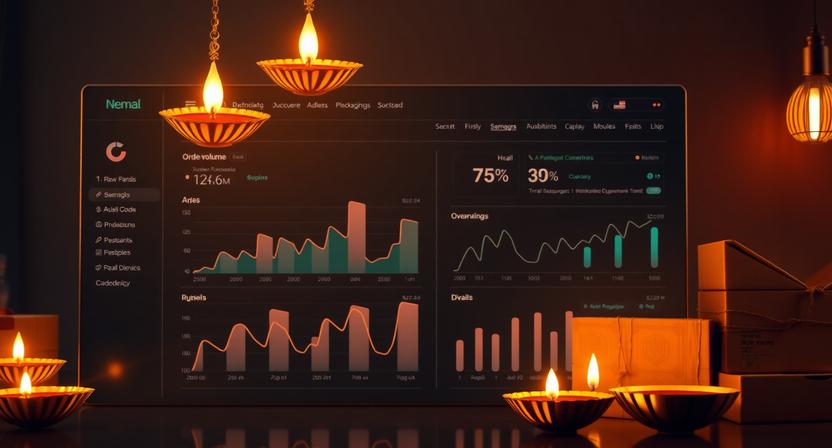

Diwali. End of Season Sale. Big Billion Days. For Indian D2C brands, festival season isn't a marketing event. It's an operations stress test.
Orders go 3-5x. Customer queries go 10x. Fraud attempts spike. Inventory that was perfectly calibrated in September is dangerously low by October 15th. Returns pile up in November like a second business you didn't ask for.
And somewhere in the middle of all this, your team is running on fumes, your WhatsApp is a war zone, and you're personally approving discount codes at 11 PM.
This is the playbook I wish someone had given me. Not marketing. Operations. The part that actually determines whether you come out of festival season stronger—or scarred.
Phase 1: Pre-Festival (30 Days Out)
Inventory: The lead time recalculation
Your normal lead time is 5 days. During festival season, it's 7-10 days. Suppliers are overwhelmed. Logistics are strained. If you're ordering based on normal lead times, you're already behind. Recalculate every SKU with festival-adjusted lead times. Add 20% buffer to your buffer. The cost of extra inventory is nothing compared to the cost of stockouts during peak demand.
Warehouse: The throughput bottleneck
Your warehouse can process X orders/day normally. Festival volumes will be 3-5X. If you haven't stress-tested your pick-pack-ship pipeline, do it now. Common failure points: label printing speed, packaging material stock, manpower for quality checks. Fix these before the wave hits.
Customer support: The SOP sprint
Write your "festival season SOPs" now. Delayed shipping responses. Out-of-stock alternatives. Refund timelines. Discount code conflicts. Every edge case you faced last year, write the response template. Your support team (or AI) shouldn't be inventing responses at 11 PM on Diwali eve.
Phase 2: During Festival (The Active Window)
Fraud: The festival multiplier
Festival season is fraud season. High order volumes mean fraud orders hide in plain sight. High-value purchases are normal during sales (so fraudsters go big). COD fraud spikes. Key rules:
- Flag all first-time customers with orders above ₹10,000
- Review COD orders above ₹5,000 from new pin codes
- Watch for bulk orders of the same SKU (reseller fraud)
- Monitor unusual email domains and phone patterns
Pricing: The margin drift danger
Mid-sale, someone will suggest "let's add another 10% off to beat competitor X." Before you approve, calculate: margin - discount - CAC - RTO cost - payment gateway fee. Many brands run festival sales at negative unit economics and call it "customer acquisition." It's not acquisition if the customer only buys on 40% off.
RTO: The silent margin killer
Festival RTO rates can hit 40%+ for some categories. Every RTO costs you shipping both ways + packaging + lost sale opportunity. Real-time RTO monitoring by pin code, product category, and order value should trigger automatic COD disabling for high-risk segments. Don't wait for the post-festival analysis to discover you lost ₹10 lakh to returns.
Phase 3: Post-Festival (The Cleanup)
Returns processing: The second operation
Returns are a business within a business. Every return needs: quality check, refund processing, inventory restocking or disposal, customer communication. If your returns pile up for 2 weeks, you're sitting on dead inventory and delayed refunds (angry customers, social media complaints). Process returns daily. Use quality check data to identify product issues upstream.
The post-mortem: Build next year's playbook
Week after festival close, gather the data: What stockouts happened and why? What fraud patterns emerged? What were the top 5 customer complaints? What discount combinations actually destroyed margin? Document everything. This becomes next year's baseline.
The biggest mistake D2C brands make during festivals
It's not pricing. It's not inventory. It's founder-as-approver.
During festivals, decisions need to be made in minutes, not hours. If every discount override, every large order review, every fraud hold needs the founder's approval, you become the bottleneck. And the business moves at your response time, which during festival season might be measured in hours while you're in back-to-back meetings.
Set your guardrails before the festival. "Approve discounts up to 25% automatically. Flag orders above ₹50,000. Hold new-customer COD above ₹5,000." Then let the system operate within those rails. You handle the exceptions, not the routine.
"Festival season success isn't about who sells the most. It's about who survives the volume without breaking their operations."
Build your playbook now. The festivals will be here before you know it.
Tags
Related Articles
I Run a ₹100 Cr Business and Still Check 6 Dashboards Every Morning—Here's What I'm Doing About It
The Real Cost of a Head of Operations in India (2026): Salary, Hiring Time, and Hidden Costs
Your Stockout Report Is Lying to You—Here's the Math Your Dashboard Won't Do
Ready to hire your AI executive team?
Join founders who've reclaimed their time with Maya.
Start Today →